
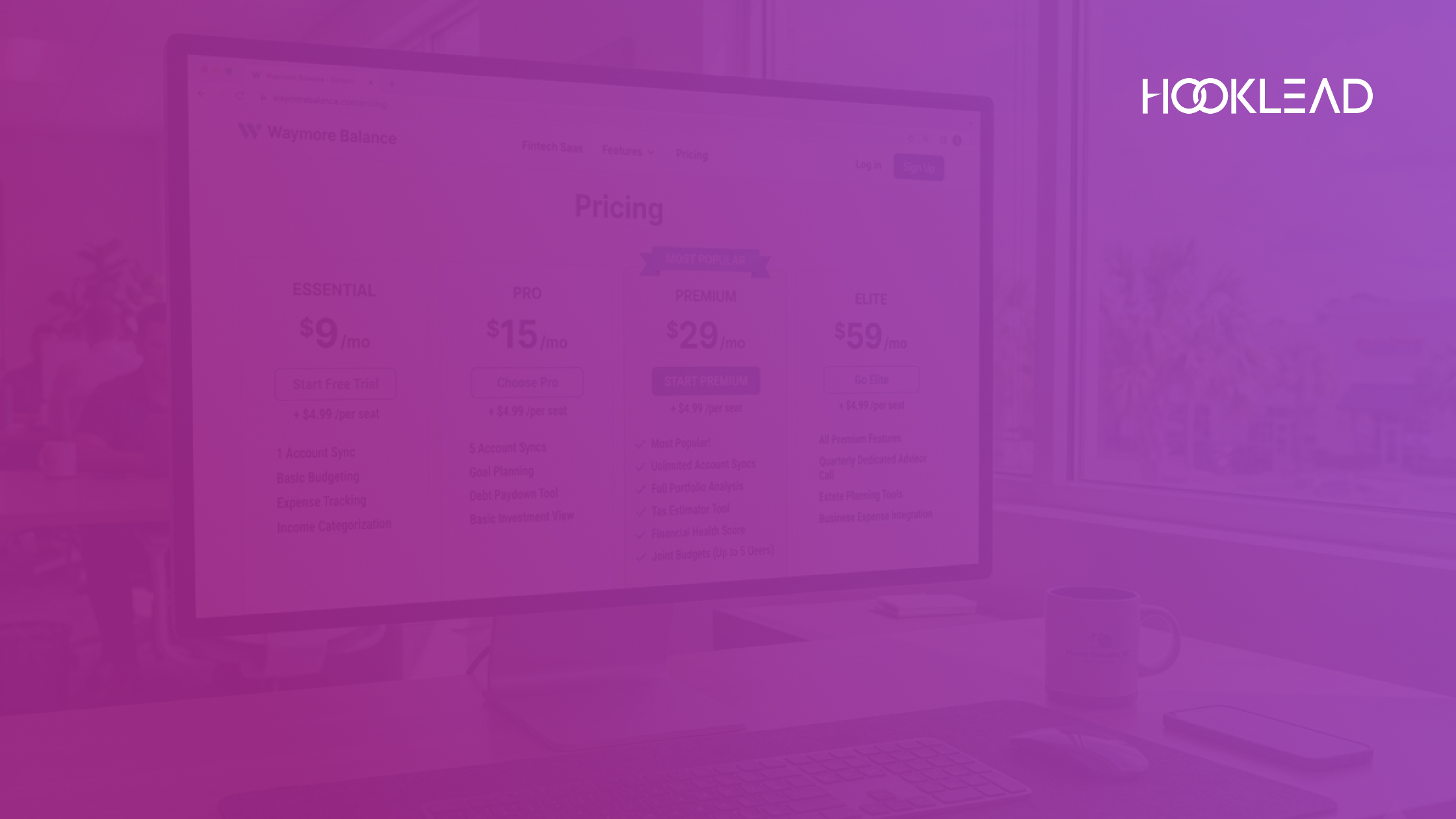
Software as a service pricing models are the structural frameworks that determine how a SaaS company charges for its product: per seat, per unit of usage, by feature tier, at a flat rate, or based on a measurable outcome. The model you choose determines not just how revenue flows in, but how customers experience value, how your sales motion operates, and how expansion revenue compounds over time.
The five core SaaS pricing models are per-seat, flat-rate, tiered, usage-based, and outcome-based. Each embeds a specific assumption about how value is delivered and when customers are willing to pay for it. Freemium is not a pricing model. It is a GTM acquisition motion that sits on top of one of these five structures.
Pricing model selection is the first layer of the pricing architecture covered in depth in SaaS Pricing Strategy: From Model Selection to Pricing Page Conversion. This article goes deeper on that first layer: defining each model, mapping it to GTM motion, and providing a decision framework for teams reconsidering a structure that is no longer performing.
The Model You Launched With May Already Be Working Against You
Per-seat pricing powered two decades of SaaS growth. It was predictable, easy to forecast, and simple to explain to a CFO. That simplicity is now its liability.
In the 12 months ending mid-2025, the share of SaaS companies using seat-based pricing as their primary model dropped from 21% to 15%. Hybrid models (combining a subscription base with usage, credit, or outcome components) jumped from 27% to 41% over the same period. That is not a gradual drift. That is a structural shift, and it happened faster than most pricing decisions do.
The catalyst is AI. When a platform automates 80% of the work a seat-based user previously did, the customer no longer needs 50 seats. They need 10. Revenue drops by 80% while the customer extracts more value than ever. That is not a retention problem or a product problem. It is a pricing architecture problem, and it compounds quietly until renewal.
The companies navigating this well (Intercom moving to outcome-based resolution pricing, HubSpot layering AI credits onto seat subscriptions, Snowflake holding consistent consumption pricing through the entire AI transition) are not reacting to the shift. They built pricing structures that aligned with how customers actually derive value. The ones struggling are those whose model made sense at launch but was never stress-tested against a different GTM reality.
If your NRR is softening, your upgrade rate is flat, or your expansion revenue is not materializing the way your model suggested it should, the pricing model itself may be the first place to look: not the product, not the sales team, not the messaging.
The Five Core SaaS Pricing Models and What Each One Assumes
Every pricing model embeds a theory of value. Before you can evaluate which model fits your GTM motion, you need to understand what assumption each one makes about how and when your customer is willing to pay.
Per-seat pricing charges a fixed amount per licensed user per month or year. It is the default model for most B2B SaaS because it is easy to budget, easy to forecast, and easy to sell. The problem is that it taxes adoption. When teams share logins or restrict access to control costs, the product gets less embedded, and a less embedded product churns faster. For PLG products where viral adoption drives expansion, per-seat pricing works directly against the motion.
Flat-rate pricing charges a single price for the product regardless of how many users access it or how much they consume. It removes all friction from adoption but eliminates expansion revenue in the process. Companies that hold flat-rate pricing long enough eventually hit a revenue ceiling where growth requires new customer acquisition only. There is no mechanism to grow revenue from the existing base.
Tiered pricing organizes the product into two to four plans, each with a different combination of features, usage limits, or user counts at a progressively higher price point. It is the most common model for PLG and hybrid GTM because it creates a natural upgrade path. The failure mode is architectural: if the features that drive the most value are gated at the wrong tier, customers either feel held hostage or have no compelling reason to upgrade. Research across hundreds of SaaS companies consistently shows that three tiers outperform four or more on both conversion rate and average revenue per user.
Usage-based pricing charges customers based on what they consume: API calls, data processed, messages sent, tasks completed. It aligns revenue with value delivery and removes the upfront commitment barrier, which is why it dominates developer-led and API-first products. Customers experience meter anxiety and self-limit usage to control costs, which suppresses the product engagement that would otherwise drive expansion. On the vendor side, revenue becomes harder to forecast, particularly in the early quarters before usage patterns stabilize.
Outcome-based pricing charges only when a defined result is achieved. Intercom's Fin AI agent at $0.99 per resolved customer issue is the most cited recent example, a model that grew from $1M to approaching $100M ARR because it removed the trust barrier between vendor and buyer. The prerequisite is a measurable, binary outcome. Most business outcomes are not, which is why fewer than 20% of SaaS companies have successfully implemented true outcome-based pricing despite significant industry discussion around it.
The AI dimension runs through all five models. AI-native products face a structural gross margin problem that legacy SaaS did not: real compute costs per inference mean that pricing decisions directly affect unit economics in a way that was irrelevant when marginal cost per user was effectively zero. Bessemer's analysis suggests AI products need to price at five to six times the equivalent SaaS product to achieve comparable unit economics. That reality is forcing a new category of hybrid models (seat subscriptions with usage or credit overlays) that attempt to capture both predictability and value alignment simultaneously.
Freemium Is Not a Pricing Model. It Is a GTM Motion.
This distinction matters more than it sounds. When founders treat freemium as a pricing decision, they optimize for the wrong variable. They ask whether to offer a free tier when the real question is whether they have the activation infrastructure to convert free users into paying customers at a rate that justifies the support and compute cost of carrying them.
Freemium describes how you acquire users. It does not describe how you charge them. A freemium product still runs on one of the five models above, typically tiered, where the free plan is the entry point and paid tiers gate the features or usage limits that matter. The GTM motion is freemium. The pricing model is tiered.
The economics are punishing below a certain scale. Published conversion benchmarks for self-serve freemium average 2% to 5%. At that rate, you need a large free user base to generate meaningful paid revenue. One frequently cited analysis puts the threshold at 50 million active users before freemium reliably drives $100M ARR, a bar that excludes most B2B SaaS companies by definition.
The failure mode is not offering freemium. The failure mode is offering freemium without an activation system built to move users from signup to value realization on a defined timeline. When free users never reach the moment that makes the product indispensable, they do not convert. They consume support resources, inflate signup metrics, and churn silently. Several well-documented cases show companies achieving thousands of freemium signups with near-zero paid conversion, not because the product was wrong, but because there was no structured path from free to activated.
The companies that make freemium work share a common pattern. Their free tier creates a specific constraint (a message history limit, a seat count ceiling, a storage threshold) that free users predictably hit as their engagement grows. That constraint is not punitive. It is architectural. It is designed to make the upgrade feel like a natural next step rather than a gate.
Notion, Slack, and GitHub each built free tiers around constraints that users hit through normal product adoption rather than artificial feature restrictions. The result was conversion that followed engagement rather than sales pressure. Each of those companies also had the activation infrastructure to get users to meaningful product engagement before the constraint became relevant, which is the part most teams skip.
If you are considering freemium as part of your GTM motion, the question to answer first is not what to include in the free tier. It is whether your onboarding and activation path is built to move a user from signup to demonstrated value within the first three days. Without that infrastructure, freemium becomes an acquisition cost with no conversion mechanism attached to it. That is what an Activation Leak looks like at the GTM level: users entering the funnel and exiting before they ever experience the value that would make them pay.
How to Match Your Pricing Model to Your GTM Motion
The most common pricing mistake is not choosing the wrong model. It is choosing a model without mapping it to three variables: how customers discover and adopt the product, how they reach the moment of meaningful value, and where expansion revenue is supposed to come from.
Product-Led Growth
Product-led growth depends on low-friction adoption and a natural upgrade trigger built into the product itself. The pricing model needs to support self-serve decision-making, which means transparent pricing, a clear value threshold that motivates upgrade, and no sales conversation required to move between tiers. Tiered and usage-based models are the strongest fits. Per-seat pricing works in PLG only when seat count naturally scales with team adoption, and even then it requires a free or low-cost entry point that does not tax initial access. Flat-rate pricing removes friction but also removes the expansion mechanism PLG depends on.
Sales-Led Growth
Sales-led growth operates on negotiated contracts, multi-stakeholder buying decisions, and annual commitments. The pricing model needs to support a deal desk, handle volume discounts, and give procurement teams a number they can budget against. Per-seat and tiered models dominate here because they are predictable and auditable. Usage-based pricing is viable in SLG but requires an enterprise commit structure layered on top: a minimum annual spend that gives the vendor revenue predictability while preserving the usage-based upside for the customer.
Hybrid GTM
Hybrid GTM is now the most common pattern among scaling SaaS companies. The typical structure is PLG for initial land, sales-assisted for expansion into larger accounts. The pricing model needs to serve both motions without creating channel conflict. Usage-based pricing functions well as the bridge because it enables low-commitment self-serve adoption while allowing revenue to expand automatically as usage grows. The enterprise sales layer can then negotiate commit deals on top of the usage baseline. Companies running this model effectively tend to show the strongest net dollar retention figures, with hybrid models producing median NDR around 140% in published benchmark data.
The Four-Question Decision Framework
First, where does your customer first experience value: before they pay, during a trial, or only after onboarding is complete? If value comes before payment, usage-based or tiered with a free entry point fits. If value requires onboarding investment, a trial-to-paid or sales-assisted model fits better.
Second, does your expansion revenue come from more users, more usage, or more features? More users points to per-seat. More usage points to usage-based. More features points to tiered.
Third, how predictable is your customer's usage pattern? Unpredictable usage makes usage-based pricing a harder sell to enterprise buyers. If your customers cannot forecast their own consumption, they will cap it to manage budget risk, which suppresses the expansion revenue the model was designed to generate.
Fourth, what does your customer's CFO need to see at renewal? Enterprise procurement increasingly requires predictability. If your model produces invoices that vary significantly month to month, you will face budget scrutiny at renewal regardless of the value delivered.
The answers to these four questions will not always point cleanly to one model. That is why hybrid architectures are now the dominant pattern. The goal is not to find the single correct model. It is to build a pricing structure where the acquisition motion, the activation path, and the expansion mechanism are aligned rather than working against each other.
The Failure Modes That Compound Silently
Pricing model misfit rarely announces itself. It shows up six to twelve months later as a renewal conversation that goes sideways, an NRR number that will not move past 100%, or an expansion motion that requires more sales effort than the revenue justifies. By the time the symptoms are visible, the structural cause has been compounding for quarters.
Per-Seat: AI-Driven Seat Erosion
Per-seat pricing erodes quietly when AI enters the workflow. A customer running 50 seats at $150 each generates $7,500 per month. When AI automation handles the majority of the work those seats were doing, the customer legitimately needs far fewer licenses. Revenue drops not because the customer is unhappy with the product, but because the product is working. That is the structural trap: the better your product performs in an AI-augmented workflow, the more it undermines the metric you are charging against. Vendors responding to this are layering AI-specific pricing on top of seat subscriptions, but doing so without a clear value narrative creates the AI tax perception, where customers feel they are paying more for a rebadged version of what they already had.
Flat-Rate: The Hidden Revenue Ceiling
Flat-rate pricing hides its ceiling until growth stalls. The problem does not surface during early growth because new customer acquisition masks the absence of expansion revenue. It surfaces when acquisition slows and the revenue model has no mechanism to grow from the existing base. A five-person team and a five-hundred-person team pay the same amount. The enterprise customer is dramatically undermonetized, and there is no pricing architecture to capture that value without a full model change.
Tiered: Wrong Feature Placement
The tier trap occurs when the feature that drives the most upgrade intent is placed at a level the customer cannot justify on its own. They need one capability from the next tier but do not need or want everything else bundled with it. The result is either a stalled upgrade or a customer who pays for a tier they resent. Reducing tier count consistently improves both conversion rate and average revenue per user in published research, because fewer tiers means less cognitive load at the upgrade decision point and less likelihood of a customer sitting in the wrong tier.
Usage-Based: Meter Anxiety
Customers who cannot predict their bill will limit their usage to manage budget risk. That self-limiting behavior is the opposite of the deep product engagement that drives retention and expansion. One documented case showed a company implementing hard usage caps and watching trial-to-paid conversion jump from 14% to nearly 25%, a direct measurement of how much meter anxiety was suppressing the conversion rate before the cap was introduced. The irony of usage-based pricing is that the customers most likely to derive value from the product are also the most likely to hit billing unpredictability, which creates churn risk at exactly the wrong moment.
Outcome-Based: Measurement Breakdown
Outcome-based pricing breaks down when outcomes are not measurable. Intercom's resolution-based model works because "resolved" is binary and verifiable. Most business outcomes are neither. When the outcome is ambiguous, attribution becomes contested at renewal, and a contested attribution conversation is a churn risk regardless of the actual value delivered. Seventy percent of companies in published research report difficulty accurately measuring outcomes in outcome-based contracts. That is not a vendor problem. It is a structural limitation of the model that only certain product categories can resolve.
The pattern across all five failure modes is the same. Misalignment between the pricing metric and the value delivery mechanism creates friction that compounds over the contract lifecycle. It does not appear in month one. It appears at the first renewal, when the customer's perception of value and the vendor's revenue expectation diverge. At that point, the conversation shifts from growth to justification, and justification is a much harder position to recover from than a pricing architecture decision made earlier.
FAQ: SaaS Pricing Models
What are the main SaaS pricing models?
The five core SaaS pricing models are per-seat, flat-rate, tiered, usage-based, and outcome-based. Per-seat charges a fixed amount per licensed user. Flat-rate charges a single price regardless of usage or user count. Tiered organizes the product into plans at progressively higher price points with different feature or usage thresholds. Usage-based charges based on consumption: API calls, tasks completed, data processed. Outcome-based charges only when a defined, measurable result is achieved. Freemium is not a pricing model. It is a GTM acquisition motion that sits on top of one of these five structures, typically tiered.
What is the best pricing model for B2B SaaS?
There is no single best model. The right structure depends on your GTM motion, where your expansion revenue comes from, and how predictable your customer's usage pattern is. Per-seat works well for sales-led motions where headcount scales with adoption. Usage-based works well for developer-led and API-first products where consumption naturally grows with value. Tiered works well for PLG and hybrid motions where a free or low-cost entry point drives adoption and feature access motivates upgrade. The dominant pattern among scaling B2B SaaS companies is hybrid: a subscription base combined with a usage or outcome component that captures expansion revenue without requiring renegotiation.
What is usage-based pricing in SaaS?
Usage-based pricing charges customers based on what they consume rather than a fixed monthly or annual fee. Common billing metrics include API calls, data volume, messages sent, active users, or tasks completed. The model aligns revenue with value delivery and removes the upfront commitment barrier, which is why it is the default for developer-led and infrastructure products. The primary challenge is revenue unpredictability on the vendor side and meter anxiety on the customer side. Customers who cannot forecast their bill will self-limit usage to manage budget risk, which suppresses the product engagement that drives retention and expansion. Enterprise deployments typically address this through annual commit structures that set a usage floor while preserving upside.
How does pricing model choice affect retention and expansion revenue?
The pricing model determines whether your revenue can grow from the existing customer base without a sales conversation. Per-seat models expand when headcount grows but contract when AI or process changes reduce seat count. Flat-rate models produce no expansion revenue by definition. Tiered models expand when customers upgrade plans, but only if the upgrade trigger is architected correctly. Usage-based models expand automatically as customers consume more, producing the strongest net dollar retention figures in published benchmark data, with hybrid usage models showing median NDR around 140%. Outcome-based models can produce strong expansion but require measurable outcomes and longer sales cycles. The model you choose is not just a revenue capture decision. It is a retention architecture decision.
What is tiered pricing in SaaS?
Tiered pricing organizes a SaaS product into two to four plans, each at a higher price point with progressively more features, higher usage limits, or additional user seats. It is the most common model for PLG and hybrid GTM because it creates a structured upgrade path from a low-cost or free entry point to higher-value plans. The primary failure mode is tier placement: if the features that drive the most upgrade intent are gated at the wrong tier, customers either stall at their current plan or pay for a tier they resent. Published research consistently shows that three tiers outperform four or more on both conversion rate and average revenue per user.
Pricing Model Selection Is a Continuous Architecture Decision
Most SaaS teams treat pricing model selection as a launch-time decision. You pick a model, you build the billing infrastructure around it, and you move on to the work of acquiring customers. The research across established and emerging SaaS companies tells a different story.
HubSpot changed its core pricing metric within two years of IPO and recovered 41 percentage points of NRR as a result. Intercom deliberately cannibalized roughly $60M in existing seat revenue to migrate to outcome-based pricing and rebuilt that base faster than the original model would have allowed. Snowflake has maintained consistent consumption-based pricing since founding and consistently produces some of the strongest net dollar retention figures in the industry. The pattern across all three is not that they found the right model at launch. It is that they treated pricing as a structural growth decision that warranted the same analytical rigor as product and GTM strategy.
The shift happening now across the SaaS landscape makes that discipline more urgent. Seat-based pricing as a primary model dropped 30% in market share in a single year. Hybrid models now represent the plurality. Credit-based pricing grew 126% year over year among the top 500 SaaS companies. These are not incremental adjustments. They reflect a fundamental realignment between how SaaS products deliver value and how they capture it.
If your current model made sense at launch but your GTM motion has evolved, your activation path has changed, or AI has entered your customer's workflow in a meaningful way, the pricing structure you are running may be working against the growth you are trying to generate. That misalignment will not show up immediately. It will show up at renewal, in your NRR trend, and in expansion conversations that require more justification than they should.
Pricing architecture is one of the core growth levers we work through with SaaS teams in the HookOps engagement. If your model is due for a structural review, start the conversation with our team at HookOps.